
Intro To Orthopedic Massage
With Vincent Cambrea
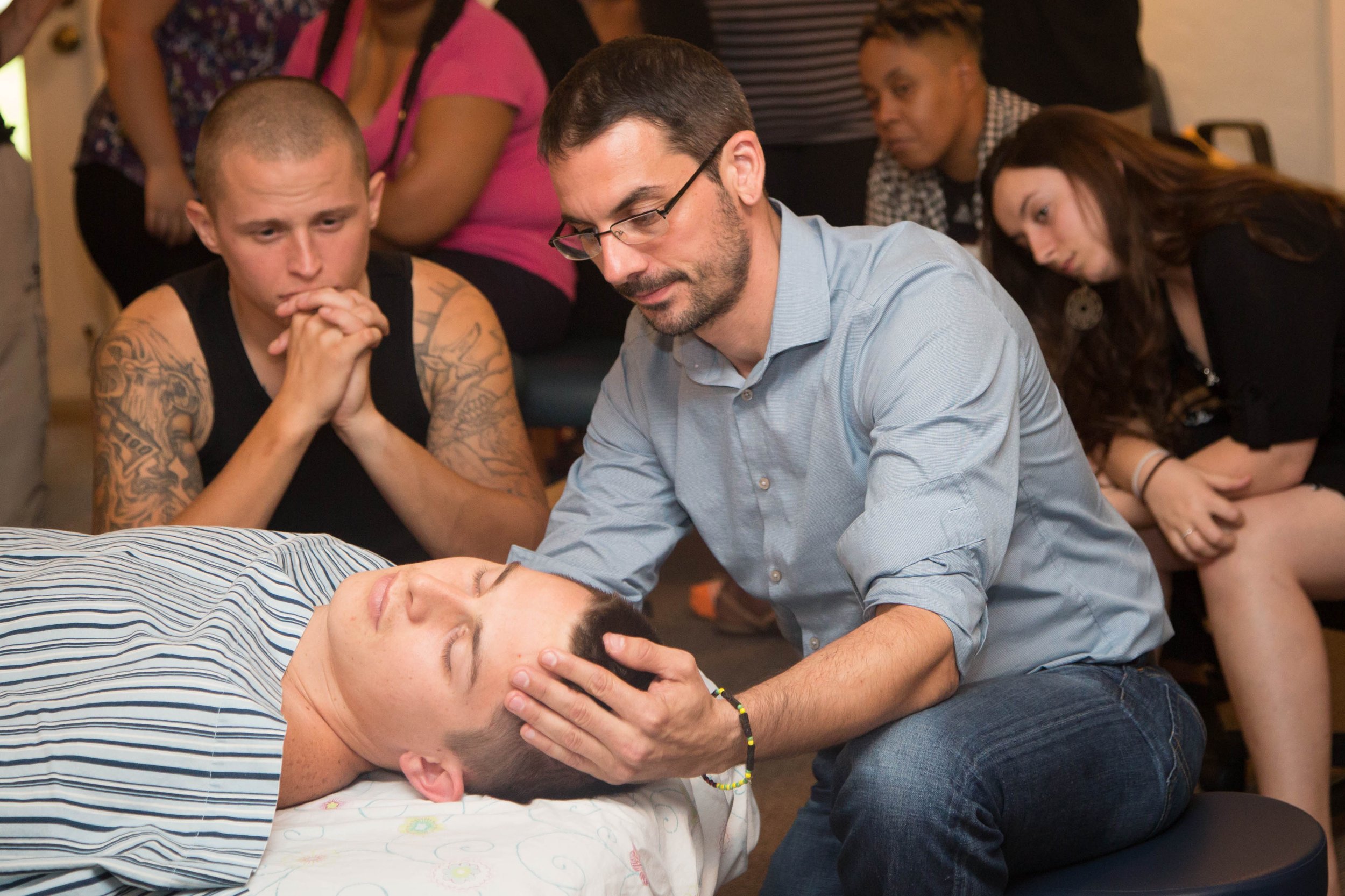
In this hands-on workshop, participants will explore the fundamental principles of orthopedic assessment, learning how to evaluate musculoskeletal function, identify passive and dynamic issues, and determine when a referral to another healthcare provider is necessary. The course emphasizes understanding over memorization, teaching therapists how to establish baselines, interpret test results, apply appropriate treatment, and retest to track progress. Through guided discussions and practical application across multiple areas of the body, students will deepen their palpation skills, gain confidence in working with pain and injuries, and clearly distinguish between assessing and diagnosing, leaving with the knowledge and clinical reasoning to provide safe, effective, and informed care.About the Instructor
Vincent Cambrea is an educator with over 25 years of clinical and teaching experience in orthopedic massage and corrective exercise kinesiology. His teaching emphasizes assessment, functional anatomy, and clinical reasoning—providing therapists with structured systems they can apply immediately in practice.
He served as Director of the Florida School of Massage and has developed advanced orthopedic and sports massage curricula taught nationwide. Vincent is the creator of the IMAP Training Program (Integrative Massage and Personal Training), and he has taught for both the National Academy of Sports Medicine (NASM) and the National Council for Certifying Personal Trainers (NCCPT). He has also contributed nationally as a speaker and writer for Massage Magazine.
Vincent’s passion has always been bridging multiple modalities to create a more complete and integrated approach to bodywork. At the core of his philosophy is the belief that the client is the whole system, and the practitioner is one contributing piece—requiring skill, humility, and thoughtful clinical reasoning.
Now based in Chattanooga, TN, he offers continuing education designed to strengthen clinical decision-making, refine hands-on skills, and elevate professional standards in therapeutic bodywork.
What You Will Learn in This Two-Day Intensive
This course provides a clear clinical framework for working confidently with pain, dysfunction, and injury. Rather than memorizing isolated techniques, you will learn how to assess strategically, think critically, treat intentionally, and re-test for measurable results.
Assessments: Pain vs. Injury
Learn how to distinguish between tissue irritation, movement dysfunction, and structural injury. Develop a systematic assessment process that establishes a baseline, forms a working hypothesis, guides treatment, and confirms results through re-testing.
Passive vs. Dynamic Structures
Understand the difference between contractile tissues (muscle and tendon) and inert structures (ligament, fascia, joint capsule, cartilage, nerve, and bone). Identify tissue involvement through movement testing and clinical response.
Functional Integrated Anatomy
Move beyond memorization and explore how the body functions as an integrated system. Learn force couples, length-tension relationships, reciprocal inhibition, synergistic dominance, and kinetic chain patterns that influence injury and recovery.
Cross Fiber Friction & Targeted Techniques
Learn when and how to apply cross fiber friction effectively. Understand its role in collagen remodeling, adhesion management, and tissue healing, and how to integrate it with movement and recovery strategies.
Tonic and Phasic Muscle Patterns
Identify predictable muscular imbalances—overactive tonic muscles and inhibited phasic muscles. Learn how to address these patterns using assessment-driven treatment and corrective principles.
Clinical Reasoning & Re-Testing
Build a structured clinical reasoning model: assess, treat, and objectively re-evaluate. Improve outcomes by measuring change and refining your approach based on results.
When to Refer Out — and to Whom
Recognize red flags and scope-of-practice boundaries. Learn how to identify neurological involvement, structural instability, or systemic concerns and collaborate effectively with physicians, physical therapists, and other healthcare providers.
Understanding Tissue Healing
Review the inflammatory, proliferative, and remodeling phases of healing. Learn how treatment strategies shift depending on whether a condition is acute, subacute, or chronic.
Communication & Client Education
Strengthen your intake process and questioning strategies. Learn how to explain findings clearly, educate clients about recovery expectations, and build trust without diagnosing.
Get Notified of New Workshops & Dates